Threat Newsletter November 2, 2026

The gap between patch and attack kept shrinking this week, and the FBI tied the largest crypto theft on record to North Korea.
- Patch first: CISA has confirmed exploitation of both PHP2Shell and the HTTP2Shell Brotli flaw. A critical Oracle E-Business Suite bug is also being probed days after its patch.
- Nation-state: The FBI attributed the $6.43 billion Binance theft to TraderTraitor. Black Lotus Labs exposed Volt Typhoon's Silent Train network, with hundreds of victims.
- Real-world impact: A suspected hack spoiled food at US military bases, a cyberattack diverted ambulances in New Mexico, and the FEC took filing systems offline a week before the midterms.
- Identity: Fake IT support on Teams keeps working, and Microsoft retires its SMS and voice MFA for Entra ID starting February 1, 2027.
Vulnerabilities and active exploitation
PHP2Shell moves from scanning to confirmed exploitation
Adel Karimi, detection and response lead at Perplexity, documented exploitation of CVE-2026-109618 and CVE-2026-109619 using honeypot data. Exabeam's Steve Povolny noted that the flaws went from scanning noise to confirmed RCE on a honeypot within days of the October 21 patches.
Key takeaways
- Patch now, then check whether you were compromised before you patched.
- Watch web servers for odd outbound connections and service accounts logging in from new places.
 Jordyn Alger

A third PHP2Shell bug won't get an emergency fix
The PHP Foundation reserved CVE-2026-115560 for a third RCE flaw, with the fix coming in the next regular release. It needs an unlikely setup: a specific session serializer configuration, a runtime switch back to php, and session upload progress enabled. Mandiant also said many public PoCs were non-functional, though it validated some that achieved RCE against default mod_php deployments, not PHP-FPM.
Key takeaways
- Set
session.upload_progress.enabled=0until the regular bugfix release ships. - Treat mod_php deployments as the priority for the first two PHP2Shell CVEs.
- This article's "no confirmed compromises" status dates from October 23 and has since been overtaken.
 Jessica Lyons

HTTP2Shell: a Brotli flaw with a wide blast radius
CVE-2026-111497, also called Node2Shell and Broccoli2Shell, is a buffer overflow in Google's Brotli decoder, affecting versions 1.0.3 through 1.2.0. Crafted compressed data can crash a process, expose memory, or enable RCE, and it affects Node.js, Python HTTP clients, and .NET. The article reported no in-the-wild attacks as of October 26, but CISA added it to KEV on October 27 with a November 10 federal deadline.
Key takeaways
- Update to Brotli 1.0.10, 1.1.1, or 1.2.1, or Node.js 22.23.4, 24.22.1, or 26.12.1.
- Restart processes and rebuild container images, or the old decoder keeps running.
- Updating the system library won't fix apps that bundle their own copy.
- Blocking inbound Brotli requests still leaves the malicious-response route open.
 Bill Toulas

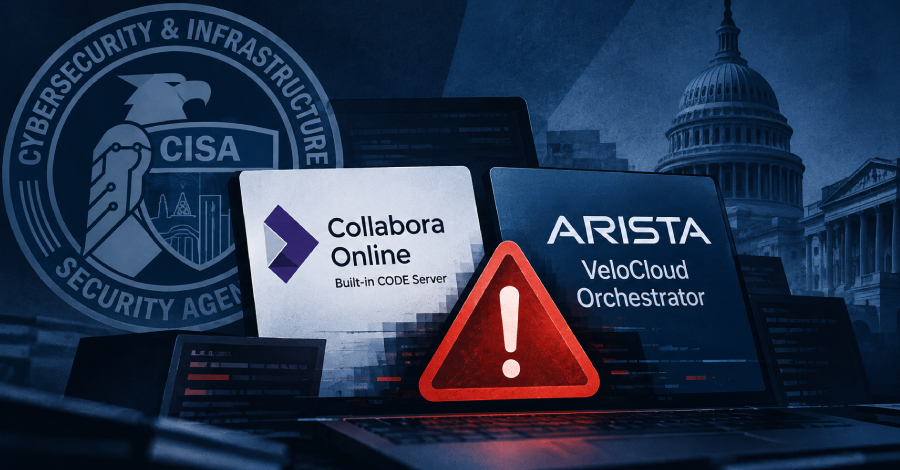
CISA flags exploited Collabora Online and Arista VeloCloud flaws
CISA added two critical bugs to KEV on October 23. CVE-2026-110447 (CVSS 9.2) is a command injection in Collabora's built-in CODE server for Nextcloud, used to plant web shells and hunt for credentials and crypto wallets. CVE-2026-114625 (CVSS 9.9) is a SQL injection in on-premises VeloCloud Orchestrator, which needs a valid session with at least the Enterprise Read Only role.
Key takeaways
- Update Collabora to 26.4.303 and VeloCloud Orchestrator to 5.2.3.18, 6.1.3.10, or 6.4.2.12.
- This is the third exploited VeloCloud Orchestrator flaw since July, so review those systems for compromise as well as patching them.
- Arista shared two source IPs to hunt for: 74.82.197[.]86 and 38.54.50[.]151.
 The Hacker News
Attackers probe a critical Oracle E-Business Suite flaw
Defused Cyber's decoys recorded exploratory exploits on October 27 against CVE-2026-101767 (CVSS 9.8), days after Oracle's October Critical Patch Update. The unauthenticated SQL injection in the Thin Client Framework servlet chains to OS command execution. Financial, payroll, HR, and procurement data could be exposed, depending on the deployment.
Key takeaways
- Patch now. If you can't, remove
/OA_HTML/AppsTCFServerfrom the EBS URL firewall allowlist and limit web tier access to trusted networks. - Hunt for unauthenticated POST requests to that servlet, unexpected files in
$APPLPTMP, and the oracle account spawning/bin/sh. - Internal EBS systems are at risk too if an attacker can reach the servlet from another segment.
 The Hacker News

Nation-state and geopolitics
FBI ties the record $6.43 billion Binance theft to TraderTraitor
The FBI attributed the theft to the North Korea-aligned group also tracked as Jade Sleet and UNC4899. It is the largest crypto theft on record, well ahead of Bybit's $1.46 billion in 2025. Funds moved across 11 blockchains and are being converted mainly to ETH, while $2.85 billion has been frozen on-chain. The group also keeps refining developer-focused lures, including trojanized Terraform providers that deliver the FLATROOF and ROOFDECK malware.
Key takeaways
- Check the FBI's published wallet list if you handle crypto flows.
- Vet Terraform providers and treat recruiter-led coding tasks as a real initial access path.
- Targets include people in cybersecurity, AI, blockchain, and recruiting, so awareness training should reach beyond finance teams.
 The Hacker News

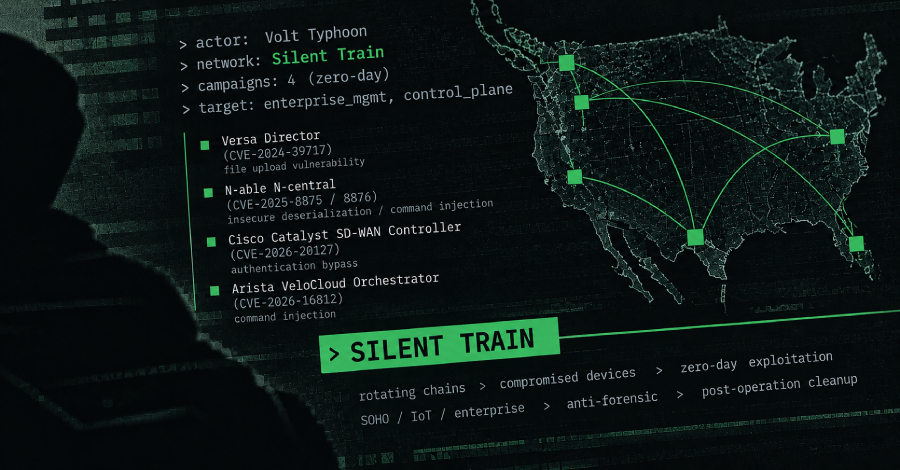
Volt Typhoon's Silent Train network supported four zero-day campaigns
Black Lotus Labs linked the now-disrupted network to Volt Typhoon, with hundreds of victims across telecom, government, defense, and critical infrastructure. It built short-lived chains from at least 27 classes of compromised SOHO, IoT, and enterprise devices, with sessions averaging about four hours before cleanup. Zero-days hit Versa Director, N-able N-central, Cisco Catalyst SD-WAN, and Arista VeloCloud, with a suspected fifth in Quest KACE.
Key takeaways
- Management and control plane platforms are the prize, so limit their exposure and log them closely.
- Don't rely on IP reputation or geofencing alone, because the final hop is a compromised US device.
- Look for temporary SSH services and keys, plus Chisel or FRP tunnels, on edge and enterprise devices.
 The Hacker News
FEC takes filing systems offline after a reported breach attempt
Reuters saw an FEC email saying a bad actor was trying to breach its systems, prompting a shutdown of web-facing services a week before the November 3 midterms. E-filing had been down since about 10 p.m. ET on October 26, blocking 24-hour and 48-hour spending reports. The FEC confirmed the outage but not an attack, and no one has been named or a breach confirmed.
Key takeaways
- This is a campaign finance transparency problem. The FEC doesn't run voting or count ballots.
- Accounts differ on search: the FEC told Newsweek report search was unaffected, while an email seen by Nextgov listed some filing search features as offline.
- Check the FEC status page for the latest, since this summary reflects reporting from October 27 and 28.
 Luke Fountain

Pentagon treats military base freezer failures as a suspected hack
Freezer failures spoiled food at base commissaries in August, with at least six affected in Reuters' review, and four officials say the case is being treated as a suspected hack. US Cyber Command and Army investigators are involved and in contact with French authorities about an October attack on more than 350 supermarkets' cooling units. The cause, the culprit, and the equipment brand at the US bases remain unknown.
Key takeaways
- Building and refrigeration controllers are part of the attack surface, so inventory them and keep them off the internet.
- Attackers may not just switch equipment off. In at least one case, temperatures were raised overnight.
- The French link is an investigative contact, not an established connection.
 Raphael Satter, AJ Vicens and Phil Stewart, Reuters

Ukraine disputes Musk's Starlink misuse claim as service returns
Ukraine said Starlink and Starshield connectivity was restored after nearly two weeks of speed restrictions that disrupted drones and frontline logistics. Elon Musk said Ukraine's military violated Starlink's terms by using it for offensive drone strikes. Ukrainian officials and advisers called that technically impossible, saying terminals on moving platforms must use Starshield. Who ordered the restrictions remains unclear.
Key takeaways
- Commercial space infrastructure can create a single point of failure for military operations.
- Policy decisions can act like an outage, so plan for loss of a provider as well as a technical failure.
- The Institute for the Study of War saw interception rates dip from 77% to about 74%, without establishing a direct cause.
 Daryna Antoniuk

Citizen Lab's AdFection report puts ad tech security in the spotlight
Citizen Lab and Confiant reported that targeted ads delivered zero-click mercenary spyware, linking the vendor Discover-Tech to spyware firm Candiru. Discover-Tech's ads reached government networks and the company appeared on Google and IAB Europe vendor lists. Sens. Wyden and Booker want stronger protections, while Google and IAB Europe defended their practices. Google and several ad networks have since cut off the vendor.
Key takeaways
- Treat ad delivery as a possible exploit path, not just a privacy issue.
- High-risk organizations should consider blocking ads and disabling mobile ad IDs on managed devices.
- Being on a certified vendor list didn't stop this vendor, so vet the supply chain directly.
 Tim Starks

Microsoft identity and collaboration
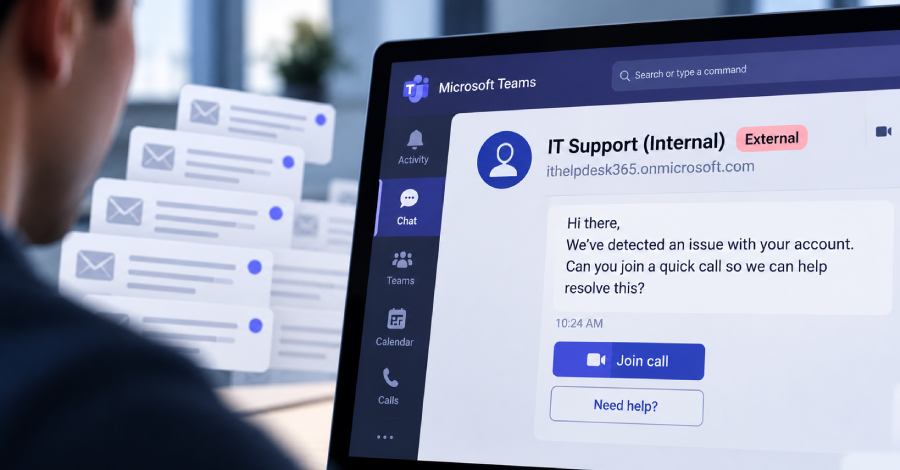
Fake IT support on Teams keeps delivering malware and ransomware
Arctic Wolf Labs described a repeating pattern across hundreds of cases: mail bombing, then a Teams message from a throwaway tenant posing as IT support. Victims are talked into granting remote access through tools like Quick Assist or AnyDesk. Attackers then deploy payloads such as the GoGRPC backdoor, move laterally, steal data, and sometimes drop ransomware. About 30-40% of cases used onmicrosoft[.]com tenant domains, with a recent shift toward paid domains like .top.
Key takeaways
- Restrict external Teams chat to trusted domains wherever you can.
- Allowlist approved remote support tools and alert on anything else, including a second RMM tool appearing.
- Teach users that a mail flood followed by an IT support chat is a red flag.
- Monitor endpoint and identity telemetry, because attackers often fetch payloads during the session instead of posting URLs in chat.
 The Hacker News
Microsoft Teams is getting AI-based phishing detection
Microsoft will start a targeted rollout in early November, with worldwide availability expected in early to mid-December. The feature analyzes conversation context to catch phishing, impersonation, and social engineering that has no malicious link or file. It focuses on external first-contact chats for most users. Microsoft says message content isn't retained for training or other secondary uses.
Key takeaways
- No admin action is needed to turn it on.
- Consider telling your SOC and users to expect the new warnings before rollout.
- It adds a layer but doesn't replace external access controls.
 Sergiu Gatlan

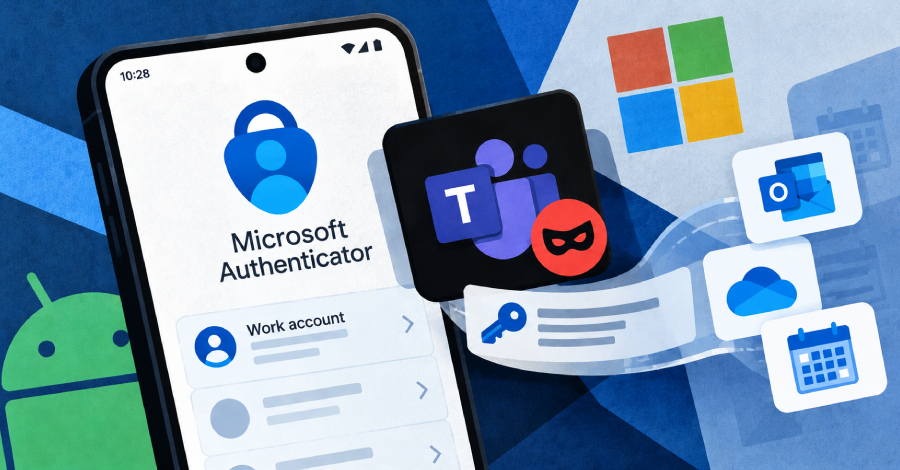
Microsoft Authenticator flaw exposed work account tokens on Android
CVE-2026-80097 (CVSS 8.6) let a malicious app with no permissions pose as a trusted app like Teams and get sign-in tokens from Authenticator. In Enclave's tests, those tokens gave access to the account's mail, files, and calendar. Enclave says its proof of concept needed no user interaction beyond a signed-in account, while Microsoft says the user must complete an authentication flow. Microsoft reports no exploitation.
Key takeaways
- Require Authenticator for Android 6.2606.4246 or later through device management.
- Limit sideloading on managed devices, since exploitation needs a malicious app on the phone.
- It's unclear whether updating cancels tokens a malicious app already obtained.
 The Hacker News
Microsoft urges Entra ID admins to move users to passkeys
Microsoft-provided SMS and voice authentication for Entra ID workforce tenants starts retiring on February 1, 2027. Microsoft says these methods are vulnerable to phishing and SIM swapping, and it recommends passkeys. Organizations that must keep phone-based authentication will need a customer-managed telecom provider through the Microsoft Security Store. Azure AD B2C and Entra External ID customer scenarios aren't covered.
Key takeaways
- Run Microsoft's Entra SMS/Voice Policy Scanner to find affected users now.
- Finish migrating before February 1, 2027, or users may hit sign-in problems.
- Expect passkey prompts as the default rollout reaches you, since users enabled for SMS or voice get asked to register one at their next MFA.
 Sergiu Gatlan

Cybercrime and breaches
MR ROBOT rents Android banking trojans to target Indian bank customers
CloudSEK exposed a malware-as-a-service platform with a control panel, a Telegram storefront, and a builder for bank-themed Android apps. The malware steals OTPs and card data through fake screens, and it can silently forward calls, including banks' fraud-check callbacks. One affiliate's data held 5,407 intercepted messages from 153 devices, and call forwarding was active on 58% of devices.
Key takeaways
- Never install bank-branded apps from links in SMS, WhatsApp, or Telegram.
- Banks should move customers from SMS OTPs to app-based or FIDO authentication.
- A fraud callback can't be trusted on its own if the customer's calls may be forwarded.
 Alessandro Mascellino

Scanner-evading loader infects 953 online stores
Sansec found a JavaScript loader on 953 stores, mostly Magento, in a campaign running since July 2025. It hides in the cms_block database table, and its server gives security scanners nothing. An October 23 rewrite added browser fingerprinting. Sansec hasn't yet obtained the final payload, so the campaign's goal remains unclear.
Key takeaways
- A clean external scan doesn't prove a store is clean, so inspect CMS content directly.
- Patching alone isn't enough. A fully patched store still picked up the newest loader, and Sansec had earlier spotted a rogue admin and a backdoor on it.
- Remove the backdoors and rogue admin accounts, then rotate database, admin, and integration credentials.
 Alessandro Mascellino

Cyberattack disrupts University of New Mexico Health Sciences Center
A "cybersecurity event" on October 26 forced UNM to shut down systems, cancel clinics and classes, and divert ambulances to Albuquerque and Santa Fe. Hospital appointments and clinics were returning to normal on October 27, while medicine, nursing, and pharmacy classes stayed canceled for a second day. The BYOD ransomware group claimed 36,000 machines and two Oracle databases, but that claim is unverified and UNM hasn't described the attack.
Key takeaways
- Healthcare incidents quickly become patient safety events, so rehearse diversion and downtime procedures.
- Treat BYOD's claims as unverified until UNM or investigators confirm them.
- Plan for shared academic and clinical systems going down together.
 Connor Jones

ENGIE customer data exposed through a partner sales tool
ENGIE told customers in France that attackers accessed names, contact details, customer IDs, contract numbers, and energy supply identifiers through a tool used by sales partners. The company says its internal systems and banking data weren't affected. It hasn't named the partner or said how many customers were hit, and no group has claimed the attack.
Key takeaways
- Accurate contract details make impersonation scams far more convincing. Knowing a contract number doesn't prove a caller is legitimate.
- Verify unexpected requests through official channels, and never share SMS codes or passwords.
- Partner tools holding customer data belong in your third-party risk reviews.
 Pierluigi Paganini
Watchdog says suppliers holding UK police data were repeatedly breached
The UK inspectorate HMICFRS said third-party suppliers holding police data have been compromised multiple times since 2021, without saying how many, which suppliers, or whether data was stolen. Policing recorded 252 cyber incidents and 796 near misses in the first three months of 2026. Most supplier contracts included no ongoing cybersecurity assurance.
Key takeaways
- Data held by suppliers can sit outside your monitoring, so contract for incident reporting and log visibility.
- Prioritize suppliers holding the most sensitive data, like victim and intelligence records.
- The inspectorate also criticized policing and fire services being left out of key UK cyber plans and legislation.
 Alexander Martin

Defense and trends
GitHub launches an npm package firewall in public preview
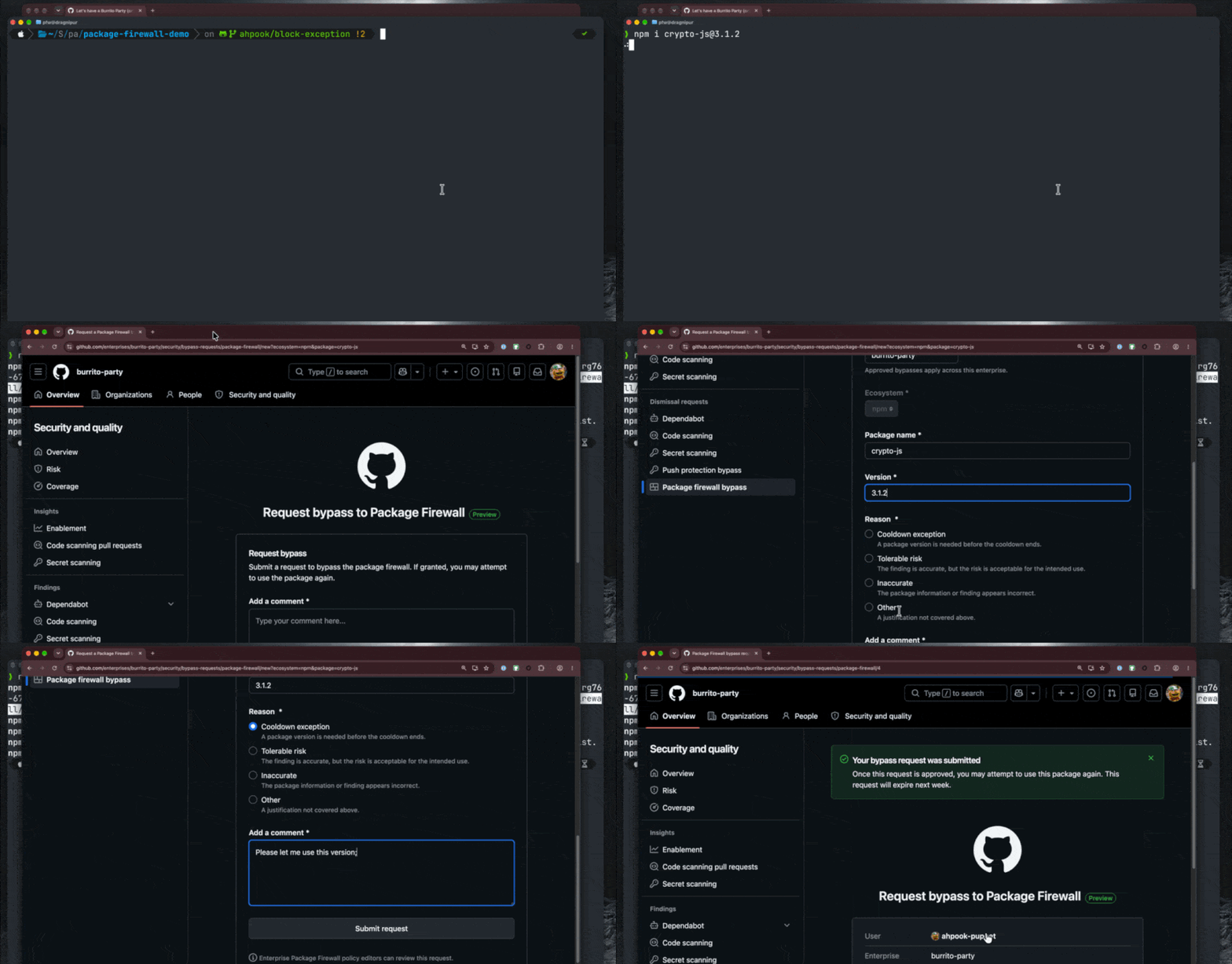
GitHub's new firewall sits between endpoints or internal registries and upstream package repositories, blocking risky npm packages at install time. Admins can set policies for malware advisories, vulnerability severity, attestation downgrades, new install scripts, and minimum package age. It's available to GitHub Enterprise Cloud customers and supports only npm for now. Rust's Cargo is adding a similar cooldown in version 1.100, due November 12.
Key takeaways
- Route coding agents and CI runners through the firewall, since they install dependencies with no human in the loop.
- The default cooldown is one day, so decide whether that's long enough for you.
- Cooldowns buy time, but they also delay legitimate fixes, and malicious code can outlast them.
 The Hacker News
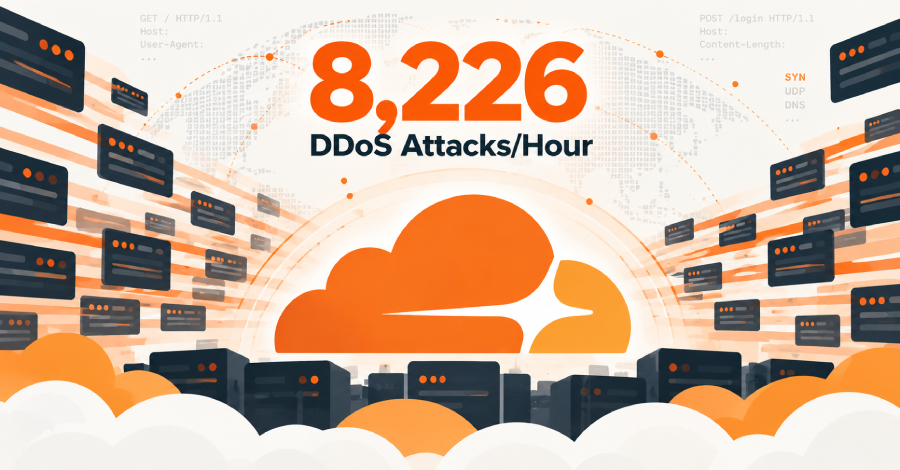
Cloudflare reports 18.2 million network-layer DDoS attacks in Q3
Cloudflare's Q3 2026 total rose 38% from 13.2 million in Q2, or about 8,226 attacks per hour, a rise it links to booter and stresser services. Short, low-bandwidth attacks surged 208% and DNS amplification jumped 215%. Attacks over 1 Tbps fell 69% to 251, likely because of March law enforcement action against botnets like AISURU and KimWolf.
Key takeaways
- Short bursts under 10 minutes can end before a manual response starts, so favor automated mitigation.
- The drop in the largest attacks may not last, since new botnets like Dysphoria and Evooo1Bot are emerging.
- Media, IT, gambling, software, and telecom were the most targeted industries.
 The Hacker News