
Threat Newsletter October 12, 2026

This week had one clear theme: the time between "something is exposed" and "something is exploited" is basically gone. Attackers hit a critical Atlassian bug within hours of a public PoC, a Shai-Hulud variant poisoned an AI SDK on npm and was caught 11 minutes later, and FortiBleed keeps turning leaked VPN credentials into ransomware footholds months after the original leak.
AI also moved from talking point to incident report. South Korean officials believe AI agents were used in breaches at seven or more banks, a new botnet called PoeLLM is building itself out of compromised AI services, and a China-aligned group is phishing the people who write U.S. AI policy.
On the defender side, law enforcement had a good week: multiple ShinyHunters arrests and the alleged Ploutus ATM malware developer in a Nebraska courtroom.
Top priorities for defenders this week:
- Patch Atlassian Data Center products for CVE-2026-21589, especially if Jira is integrated with Crowd.
- If you run FortiGate SSL VPN, assume credentials may be compromised: kill sessions, enforce MFA, audit admin accounts, and move admin password storage to PBKDF2.
- Patch on-prem SharePoint for both the 2025 ToolShell flaws and the 2026 bugs flagged by CISA.
- Check npm dependencies for Tensorlake SDK 0.5.144 and the MALFEX packages listed below.
- If you run Metabase, upgrade to Metabase's minimum safe release, not just the first fix.
Warlock Ransomware Hits Critical Infrastructure in Portuguese- and Spanish-Speaking Countries
Symantec's Threat Hunter Team reports that a China-based group is using Warlock ransomware against critical infrastructure across Europe, Africa, and Latin America, including a water utility, a telecom provider, a university, and a regional government. The group is still getting in through unpatched SharePoint, using both the 2025 "ToolShell" flaws and newer 2026 SharePoint bugs that CISA warned about in July. In one intrusion, the attackers disabled security tools on dozens of hosts before deploying ransomware, and they used tooling meant to look like normal developer or admin traffic.
Key Takeaways:
- Unpatched SharePoint is still a reliable way in for both ransomware and espionage actors.
- Patching only the 2025 ToolShell bugs isn't enough; the 2026 vulnerabilities are being exploited too.
- Watch for mass security-tool tampering across many hosts; it's a strong pre-ransomware signal.
- Microsoft hasn't linked this group to any known Chinese state-backed cluster.
 Jonathan Greig

Ransomware Forces Vicksburg, Mississippi to Shut Down City Systems
A ransomware attack forced Vicksburg, a city of more than 20,000 people, to take its computer systems offline. Emergency services weren't affected, but utility payments were disrupted. The mayor said no one's utilities will be cut off and no late fees will be charged while the investigation continues. The FBI, DHS, state officials, and private responders are involved. The city hasn't said whether personal data was taken or who was behind the attack.
Key Takeaways:
- Small and mid-sized municipalities are still prime ransomware targets.
- Mississippi has now had several major incidents, including UMMC, an electric utility, and a coastal county.
- Separating emergency services from general city IT paid off here.
 Jonathan Greig

Ukraine's Largest Grocery Chain ATB Confirms Cyberattack
ATB, which operates more than 1,300 stores, confirmed a cyberattack after a group called DataSuckers posted a $400,000 extortion demand with a countdown timer on the company's own website. ATB says customer data wasn't compromised. The attackers claim they took data on 7.9 million customers, employee passport details, and 11 million+ order records, and say they'll sell it instead of leaking it. The claims haven't been independently verified. DataSuckers says it's financially motivated, communicates mainly in Russian, and recently claimed attacks on Russian companies Dodo Pizza and Tez Tour.
Key Takeaways:
- Defacing the victim's own site with the ransom note is a high-pressure extortion tactic.
- DataSuckers hits targets on both sides of the Russia-Ukraine conflict, consistent with its financially motivated claims.
- Treat the victim's denials and the attacker's claims with equal skepticism until the data is verified.
 Daryna Antoniuk

Osaka Metropolitan University Cancels Classes After Suspected Ransomware Attack
One of Japan's largest universities shut down much of its IT environment after a suspected ransomware attack took about 500 servers offline. Email, the internal network, payroll, HR, accounting, library, and academic systems were all affected, and classes were cancelled for several days. Japanese media report that data on at least 130,000 current and former students, faculty, and affiliates may be exposed, though the university hasn't confirmed theft. The hospital's medical record system and externally hosted admissions systems were unaffected.
Key Takeaways:
- Universities remain high-impact targets with large, flat environments.
- Hosting critical systems separately (hospital EMR, admissions) limited the damage.
- This is part of a wider wave of Japanese incidents, including Nikkei, Daiwa Securities, Yamato Transport, and Dai-ichi Life, though no link has been established.
 Daryna Antoniuk

China-Aligned TA419 Targets U.S. AI Policy Experts with AitM Phishing
Proofpoint attributes a series of credential phishing campaigns to TA419, a China-aligned espionage group targeting AI experts at U.S. think tanks, universities, and law firms. The actor impersonated economists, a former White House OSTP official, and an Anthropic employee, with one lure titled "Request for Feedback on Military Integration of Claude." The campaigns start with harmless outreach, and the malicious link only arrives after the target replies. That link leads through a redirect chain and a Cloudflare Turnstile check to a OneDrive adversary-in-the-middle page. The page uses a modified "Frameless Browser-in-the-Browser" technique that captures credentials and session cookies while the login appears to succeed normally.
Key Takeaways:
- Reply-triggered phishing beats a lot of email security, because the first message has nothing malicious in it.
- AitM session theft defeats standard MFA; passkeys and other phishing-resistant methods are the real fix.
- AI policy has joined TA419's existing focus on defense, energy, and foreign policy targets in the U.S. and Japan.
- Anyone working in AI policy should verify unsolicited "feedback" or collaboration requests out-of-band.
 The Hacker News
Ukrainian Drone Strike Disrupts Major Yandex Data Center
A reported Ukrainian drone strike knocked out a Yandex data center in Sasovo, in Russia's Ryazan region. Yandex acknowledged a power outage and moved workloads elsewhere but didn't mention a drone. NetBlocks saw Yandex network connectivity drop to about 70% of normal, and Yandex Cloud, Disk, Documents, and several dependent Russian websites were disrupted. The facility sits inside a UK-sanctioned machine-tool plant tied to Russia's defense sector, so it's unclear which was the intended target. The strike comes after Russia began hitting Ukrainian data centers and telecom infrastructure in September.
Key Takeaways:
- Data centers are now explicit kinetic targets for both sides of the war.
- Cloud resilience planning has to include physical destruction, not just cyber or power events.
- Co-locating data centers with defense-linked industrial sites raises their target value.
 Daryna Antoniuk

South Korean Officials Believe AI Agents Were Used to Hack Several Banks
South Korea's President Lee Jae Myung said authorities are investigating bank breaches that were likely carried out with AI agents. At least seven financial institutions were hit, including Hana Bank, KB Kookmin Bank, and Shinhan Bank, exposing data on at least 68,000 people, including names, phone numbers, income, and borrowing history. Officials believe the Chinese cybersecurity tool Artex AI was involved. Investigators have identified 33 attacker IP addresses across at least 12 countries, and a 28-person investigative team has been formed. This is the first publicly known case of AI agents hacking the financial sector.
Key Takeaways:
- AI-assisted intrusion is now a confirmed, real-world financial-sector threat.
- Lower skill barriers mean more actors can run complex, multi-target campaigns.
- Expect regulators to start asking how banks detect and respond to automated, agent-driven attacks.
 Suzanne Smalley

PoeLLM Botnet Hides Its C2 Address Inside a Poem on GitHub
Lumen's Black Lotus Labs says a malware strain called PoeLLM has compromised more than 3,400 servers since April, mainly by targeting open-source AI services such as LiteLLM and Ollama, along with Gotenberg and Gitea. The clever part is the C2 resolution. The malware pulls a harmless-looking poem from GitHub, extracts four words at fixed positions, and maps each to a number using a hardcoded dictionary to build the current C2 IP. The operator can change the C2 just by editing the poem, without touching the malware. The botnet is currently used for exploit scanning and cryptomining but supports remote code execution. Researchers believe the operator speaks Italian.
Key Takeaways:
- Self-hosted AI services exposed to the internet are being mass-compromised.
- Steganographic dead-drop C2 is very hard to catch without the malware sample itself.
- Infected servers are turned into attack proxies, so an exploit attempt's source IP may itself be a victim.
- Check for unauthorized outbound connections from LiteLLM, Ollama, and similar hosts.
 Matt Kapko

Shai-Hulud Worm Hits AI Infrastructure via Tensorlake SDK
Socket and SafeDep detected a Shai-Hulud variant in version 0.5.144 of the Tensorlake SDK on npm. The package gets about 12,000 downloads per week, and Tensorlake is a platform for running isolated AI agents and untrusted AI-generated code. The variant shares code with ChainDrop, which compromised keyv and flat-cache in August. It steals wallets, browser passwords, GitHub Actions secrets, cloud credentials, and tokens, keeps a C2 channel open, and can delete the user's home directory under certain conditions if a monitored GitHub token is revoked. Socket flagged it within 11 minutes, and the version was pulled and replaced with 0.5.145.
Key Takeaways:
- The SDK install runs on the developer's machine or build runner, outside any agent sandbox.
- Order matters during cleanup: disable the token monitor before revoking credentials, or risk data loss.
- Socket recommends rebuilding affected systems from a trusted source before restoring secrets.
- Check lockfiles for tensorlake@0.5.144.
 Brandon Vigliarolo

MALFEX Campaign: Eight Malicious npm Packages Deliver Overlord RAT and Stealer
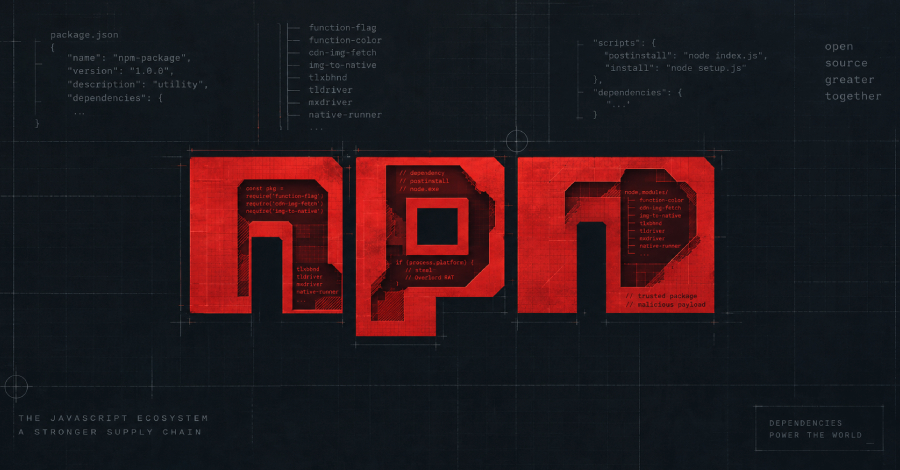
CloudSEK and Checkmarx detailed MALFEX, a long-running npm campaign by a single actor who has published 12 packages since August 2023, eight of them malicious, with 40,767 total downloads. Most of those downloads (37,419) came from one package, function-flag. The packages use install-time lifecycle hooks to infect Windows systems through three paths: a loader for the open-source Go RAT Overlord (which pulls its C2 address from Solana transactions), a Node.js stealer called movinlike that targets Discord, browsers, Telegram, and crypto wallets, and a generic downloader. Three packages were still live at the time of reporting. The operator appears to be Portuguese-speaking.
Malicious packages: tlxbnhd, tldriver, mxdriver, img-to-native, native-runner, function-flag, function-color, cdn-img-fetch
Key Takeaways:
- Malicious code can hide in a dependency (function-color only pulls in function-flag) rather than the top-level package.
- postinstall hooks remain the main execution vector; consider
--ignore-scriptsin CI where practical. - Overlord RAT is also showing up in WordPress exploitation and fake-Zoom macOS campaigns.
- Hunt for
%APPDATA%\node.exeand connections tocdnzona.discloud.app.
 The Hacker News
Attackers Exploit Critical Atlassian Flaw Within Hours of PoC Release
CVE-2026-21589 (CVSS 9.3) is a pre-auth arbitrary file read affecting Bitbucket, Confluence, Jira Software, Jira Service Management, Bamboo, Crowd, Crucible, and Fisheye Data Center products. Atlassian disclosed it on October 5, and watchTowr published analysis and a PoC on October 6. watchTowr showed that when Jira is integrated with Crowd, the bug can expose a config file holding plaintext Crowd application credentials, which they used to create a Jira admin. Previdian's honeypots saw exploitation attempts within hours of the PoC, logging 190 attempts from 32 IPs in 10 countries by October 8. CISA hasn't added it to KEV yet.
Key Takeaways:
- PoC-to-exploitation time is now measured in hours; don't wait for KEV.
- The Jira + Crowd combination turns a file read into full admin takeover.
- If you can't patch now, remove the instances from the internet or apply Atlassian's firewall and rewrite rules.
 Eduard Kovacs

FBI Warns Ongoing FortiBleed Attacks Are Locking Out FortiGate Admins
The FBI says FortiBleed attacks against FortiGate firewalls and SSL VPNs are still active. Attackers log in with leaked, infostealer-sourced, sprayed, or stuffed credentials, extract additional authentication data, and crack password hashes offline on a distributed GPU cluster running Hashcat and Hashtopolis. In some cases they create new admin accounts and delete or change the real admins' credentials, locking victims out of their own devices. FortiBleed has been linked to INC/Lynx and Payload ransomware, and SOCRadar now counts 86,644 compromised devices. An exposed attacker server showed automated scanning, honeypot filtering, revenue-based target prioritization, and access being packaged for sale.
Key Takeaways:
- Patching and a password reset aren't enough on their own.
- FBI guidance: restrict external access, terminate all VPN sessions, enforce MFA, and review logs for unauthorized changes.
- Switch admin password storage to PBKDF2; legacy SHA-256 hashes are practical to crack offline.
- Treat unexpected new admin accounts on edge devices as a likely pre-ransomware indicator.
 Bill Toulas

Fortra Patches Critical Vulnerabilities in BoKS
Fortra fixed eight flaws in BoKS (Core Privileged Access Manager), which centrally manages access control for Unix and Linux fleets. Three are critical:
- CVE-2026-79901 (CVSS 9.9): Auth bypass caused by AD service account passwords generated from a pseudo-random sequence seeded with the Unix timestamp. An ordinary authenticated AD user can request a service ticket and verify guessed passwords offline.
- CVE-2026-79898 (CVSS 9.1): Command injection in crlserver that lets an authenticated user run commands as root on the BoKS Master, reachable via BCC and the WSI REST/SOAP APIs.
- CVE-2026-12627 (CVSS 9.8): Remote stack buffer overflow in autoregistration.
- No in-the-wild exploitation has been reported.
Key Takeaways:
- A compromised PAM platform means compromised everything it manages; prioritize this patch.
- Rotate BoKS-managed AD service account passwords after patching, since existing ones may be predictable.
- Weak password generation in security tooling is still showing up in 2026.
 Ionut Arghire

Microsoft Outlook Will Block MSIX Attachments Starting November
Microsoft is adding .msix and .msixbundle to the default blocked attachment types for Outlook on the web and the new Outlook for Windows. Rollout to Exchange Online starts in early November, with general availability expected by mid-November. The change applies to the default OWA mailbox policy and any custom policies. Admins who need these file types can add them to AllowedFileTypes. This follows earlier blocks on .library-ms and .search-ms and the removal of inline SVG rendering.
Key Takeaways:
- MSIX installer files have been abused for malware delivery, and this closes a common email path.
- Most organizations won't notice, but check whether any internal software distribution relies on emailed MSIX files.
- Attackers will likely shift to links, archives, or other formats, so update detections accordingly.
 Sergiu Gatlan

Attackers Hijack Three ccTLD Registries to Obtain Google Certificates
Google's Chrome team says attackers compromised the .gh (Ghana), .sl (Sierra Leone), and .as (American Samoa) registries and changed authoritative DNS records. That let them pass domain-control validation and obtain valid HTTPS certificates for several Google domains and other major brands. Google says its own systems weren't breached and the issuing CAs didn't act improperly. Chrome blocked the certificates via CRLSets and worked with CAs to revoke them, and CT logs revealed more affected organizations. Google warns that browser-side blocking may have missed some domains and doesn't protect non-Chrome users.
Key Takeaways:
- Whoever controls DNS controls certificate issuance, even without touching your servers.
- Monitor Certificate Transparency logs across your whole domain portfolio, including parked and regional ccTLDs.
- Use restrictive CAA records with ACME account binding to block reuse of cached validations after a hijack.
- Organizations with .gh, .sl, or .as domains should review recent CT entries now.
 Alessandro Mascellino

Wazza Phishkit Targets Banking, Government, and Manufacturing
ANY.RUN identified Wazza, a phishkit targeting banking, manufacturing, and government organizations in the U.S., Europe, and Australia. Before showing any lure, Wazza runs visitors through a multi-stage routing chain: a wildcard landing domain checks whether the hostname belongs to an active campaign, a Cloudflare Workers beacon tags the visitor, a short-lived signed session token is minted, and an anti-bot gate checks the token and browser telemetry. Only visitors who pass reach the final Adobe-themed Device Code phishing page, which targets account authentication instead of just collecting passwords.
Key Takeaways:
- Gated phishing kits show sandboxes and scanners a clean page, so automated URL verdicts can be wrong.
- Device Code phishing is still effective. Restrict or monitor device code flows in Entra ID where possible.
- IOCs from the analysis include
boegl-krysl[.]eu(andcheck.subdomain),/api/wazza-config,/api/mint-token, and abeacon-surge-syncworkers.dev host. - Note: this is a vendor-contributed piece from ANY.RUN, so weigh the product messaging accordingly.
 The Hacker News
Arizona Courts Confirm Hackers Stole Data on 1.3+ Million People
Arizona's court system confirmed that attackers copied backup court files after a phishing email led an employee to click a malicious link. The data includes names, SSNs, and case numbers going back 30 years from the FARE program, which collects fines and fees for traffic and criminal cases. The attackers also took more than 150,000 Foster Care Review Board reports dating to 2010, covering about 8,000 children currently in foster care, plus protective order records. The court says this wasn't ransomware, no ransom has been demanded, and no group has claimed it.
Key Takeaways:
- One phishing click led to theft of decades of highly sensitive data.
- Backups are a target too; they need the same access controls and monitoring as production.
- Exposed foster care and protective order data creates real physical-safety risks, not just identity theft.
- Data with no ransom demand and no claim is worrying; the motive is still unknown.
 Jonathan Greig

Frontline Education Breach Exposes School District Employee Data
Frontline Education, which provides HR and workforce software to K-12 districts, is notifying districts of a breach. Attackers exploited a vulnerability in an unnamed third-party application, which Frontline identified on August 14. In at least one district, every employee was affected, with exposed SSNs, email addresses, and home addresses. Another district reported 1,210 affected employees. Notices came from a Cyberscout address, which some IT admins initially suspected was phishing until they confirmed it with Frontline. Districts have until October 16 to opt out of Frontline handling notifications. The total number of affected districts is unknown.
Key Takeaways:
- Ed-tech vendors are a concentrated risk; one breach hits many districts at once.
- Frontline hasn't named the third-party software or the initial access date.
- Breach notifications from third-party mail services look a lot like phishing; districts should verify and warn staff.
- District IT: confirm your opt-out decision before October 16.
 Lawrence Abrams

Japan Sees Sharp Rise in Web Data Leaks Tied to Mobile API Abuse and Metabase Attacks
JPCERT/CC warned of a wave of personal data leaks from Japanese web systems around September 2026. Macnica counts 119 such incidents this year through October 6, compared with 84 in all of 2025, with 81 occurring since July. Major cases include Park24's Times Car (about 6.6 million accounts, plus ID documents for about 1.6 million) and Yakiniku King's app (10.8 million records). Attackers reverse engineer mobile apps to find API endpoints and keys, hit internal APIs not exposed in the app UI, use blind NoSQL injection, and reuse keys stolen elsewhere. They also exploit the Metabase SQL injection flaw CVE-2026-72898 (CVSS 10.0, in CISA KEV). JPCERT/CC released attacker IPs and User-Agents. No actor has been named, and no AI-discovered zero-days have been confirmed.
Key Takeaways:
- API keys embedded in mobile apps aren't secret; obfuscation doesn't help.
- Enforce access control on every API endpoint, including ones the app UI never calls.
- Metabase users should upgrade to Metabase's minimum safe release, not just the first patched version.
- Metabase compromise indicator: a
POST /api/session/reset_passwordreturning 400 followed byGET /api/user/currentreturning 200. - The same activity has been seen in 13 other countries, including South Korea, France, and Poland.
 The Hacker News

FBI Confirms "Multiple" Arrests in ShinyHunters Investigation
The FBI confirmed that it and its partners have arrested several suspects tied to the September breach of the FBIJobs.gov portal, which was attributed to ShinyHunters. Reuters reports that Saif al-Din Khader ("Rey"), described by Brian Krebs as the technical operator and public face of Scattered LAPSUS$ Hunters and allegedly involved in the 2025 Jaguar Land Rover attack, was detained in Jordan on September 29 and is cooperating. This follows Dutch police's arrest of a 24-year-old alleged ShinyHunters leader. Brett Leatherman of the FBI's Cyber Division publicly urged remaining members to come forward before they're found.
Key Takeaways:
- A cooperating insider could expose much more of the ShinyHunters / Scattered LAPSUS$ Hunters network.
- Going after the FBI itself appears to have made the group a top law enforcement priority.
- Expect disruption, rebrands, or splinter groups in the near term rather than an outright end to the activity.
 Jessica Lyons

Alleged Ploutus ATM Malware Creator Appears in Nebraska Court
Anibal Alexander Canelon Aguirre, a 50-year-old Venezuelan known as "Prometheus" and "The Engineer," pleaded not guilty in Nebraska federal court. He's accused of being the mastermind behind the Ploutus ATM jackpotting malware, and he was the first cybercriminal ever placed on the FBI's Ten Most Wanted list. He faces charges including bank fraud and burglary conspiracy, computer fraud, money laundering, and material support to terrorists over alleged ties to Tren de Aragua, with up to 70 years in prison. DOJ says it would be inaccurate to call his return an extradition and declined to explain further. Fox News reported he was arrested in Venezuela. Prosecutors say his crew ran 117 jackpotting attacks from 2024 to 2025 for more than $5.4 million.
Key Takeaways:
- U.S. officials have tracked 1,500+ jackpotting attacks with $40.7 million in losses.
- Researchers haven't independently confirmed Aguirre as Ploutus's developer.
- ATMs in remote locations remain the preferred targets; physical security of the ATM top hat matters.
- 120 people have now been charged in the broader scheme.
 Jonathan Greig