Threat Newsletter June 1, 2026

The final week of May 2026 delivered a dense wave of threat activity spanning every major category — from sophisticated nation-state campaigns to commodity fraud targeting World Cup fans. The dominant narrative across this reporting period is the accelerating weaponization of trust: trusted platforms (HuggingFace, GitHub, LinkedIn, Microsoft 365), trusted brands (Adobe, FIFA, Spectrum), and trusted people (IT helpdesk staff, trading colleagues on Telegram) are being systematically exploited as attack vectors.
Supply chain attacks reached a new intensity. The Megalodon GitHub campaign poisoned over 5,500 repositories in a single six-hour window, while the GlassWorm botnet was only disrupted after an industry coalition involving CrowdStrike, Google, and Shadowserver struck all four C2 channels simultaneously. Attackers are no longer just targeting organizations — they are targeting the developers who build them, embedding backdoors in CI/CD pipelines and package registries to cascade compromise downstream.
Nation-state actors remained highly active. North Korea's Lazarus Group deployed a new fileless memory-only RAT (RemotePE) against crypto and financial firms, stealing an estimated $577M in the first four months of 2026. Iran's Nimbus Manticore updated its tooling mid-conflict and expanded targeting to U.S. aviation companies. Chinese-speaking threat actors matured their phishing-as-a-service operations to real-time credential interception, and a Chinese fraud gang built a pixel-perfect FIFA website clone across 300+ domains ahead of the World Cup.
Significant data breaches continued. ShinyHunters struck Charter Communications (up to 40M records) and confirmed the 6-million-person Carnival Cruise breach — both initiated through social engineering of a single employee account. On the positive side, Anthropic's Project Glasswing disclosed over 10,000 critical vulnerabilities across critical software in its first month.
RatPressto: The Brazilian Phishing Kit Dressing Malware in Adobe's Clothes
A sophisticated phishing campaign targets financial organizations by impersonating Adobe Document Cloud to silently install ScreenConnect remote access malware. Tracked as the 'RatPressto' kit by Fortra's FIRE team, it abuses compromised WordPress sites as delivery infrastructure, attributed with medium confidence to a Brazilian threat actor based in São Paulo. A two-stage attack displays a fake Adobe loading page while a hidden iframe silently downloads and executes a ScreenConnect installer beaconing to a C2 server on port 8041.
Key Takeaways
Abuse of legitimate remote administration tools (ScreenConnect) makes detection by standard security tools significantly harder.
Alert on outbound TCP port 8041 connections and msiexec processes launched from temp directories as reliable indicators of this infection chain.
Audit WordPress environments for exposed wp-admin interfaces; enforce MFA on all WordPress admin accounts.
\Infrastructure linked to IP 177[.]154[.]191[.]148 (São Paulo) and GitHub account 'creativebobo' — block at perimeter.
 Tushar Subhra Dutta
JINX-0164: North Korea's LinkedIn Headhunters Are Actually Installing macOS Backdoors
Threat actor JINX-0164, assessed as North Korea-linked, uses LinkedIn job lures and fake meeting applications to infect cryptocurrency developers with custom macOS malware. Victims are approached via LinkedIn with attractive job offers in the crypto space, then directed to install a malicious 'meeting app' as part of the interview process. Once installed, the malware delivers a full-featured backdoor targeting developer credentials, crypto wallets, and source code repositories — consistent with the Lazarus Group 'Contagious Interview' / 'Dream Job' pattern.
Key Takeaways
LinkedIn remains a primary social engineering vector for North Korean APTs targeting crypto and fintech employees.
Treat any unsolicited request to install a 'meeting app' or run code during an interview process as a red flag requiring security review.
macOS is an increasingly targeted platform — endpoint detection and behavioral monitoring is critical for developer machines.
Crypto and DeFi companies should conduct security awareness training specifically addressing fake job offer lures.
 Tushar Subhra Dutta
Kali365: The FBI's New Nightmare That Steals Your Microsoft 365 Without Touching Your Password
The FBI issued a warning about Kali365, a rapidly expanding phishing-as-a-service platform observed since April 2026 that abuses Microsoft's legitimate device authorization flow to silently grant persistent access to attacker-controlled applications. Rather than harvesting passwords directly, Kali365 tricks users into approving OAuth device authorization requests, giving attackers long-lived access tokens that bypass MFA. Its abuse of legitimate Microsoft infrastructure makes it especially difficult for standard security controls to detect.
Key Takeaways
Phishing-as-a-service kits are increasingly targeting authentication tokens rather than passwords — MFA alone is no longer sufficient protection.
Implement Conditional Access Policies that restrict device code flow authentication, especially from non-managed devices.
Monitor and audit OAuth application consent grants in Azure AD / Entra ID regularly for unauthorized third-party approvals.
Train users to never approve device authorization prompts they did not explicitly initiate.
Matt Kapko
China's PhaaS Underground Goes Real-Time
Google's Threat Intelligence Group documented rapid maturation of Chinese-language phishing-as-a-service (PhaaS) ecosystems, identifying at least a dozen active offerings. A key evolution: operators have shifted from static password harvesting to real-time adversary-in-the-middle (AiTM) credential and session token interception. Unlike Russian counterparts (who target corporate customers), Chinese PhaaS actors focus on individual consumers of financial and streaming services. The Lighthouse SMS phishing kit was identified as one of the most prominent.
Key Takeaways
Real-time credential interception nullifies SMS-based MFA — organizations must transition to phishing-resistant authentication (FIDO2/passkeys).
Chinese PhaaS operations are expanding globally and moving down-market — consumer-facing services need real-time session anomaly detection.
Financial institutions serving both retail and enterprise clients face double exposure from both Chinese and Russian PhaaS ecosystems.
 Kevin Poireault
The IT Guy Is a Crook: Silent Ransom Group Now Walks Into Your Office to Steal Your Data
The FBI issued a flash alert warning that Silent Ransom Group (SRG, also known as Luna Moth, Chatty Spider, UNC3753) is escalating campaigns against U.S. law firms by impersonating IT helpdesk staff through phone calls and phishing emails. When remote social engineering fails, the group physically sends operatives to victims' offices, convincing employees to allow USB device insertion under device imaging pretext. Attackers exfiltrate data using WinSCP or a hidden version of Rclone with no ransomware deployment, making detection harder.
Key Takeaways
Physical intrusion tactics combined with social engineering represent a new threat vector that technical controls alone cannot mitigate.
Law firms should implement strict visitor policies, lock USB ports on workstations, and require in-person identity verification for IT personnel.
Alert staff that legitimate IT support will never request device access via an unsolicited phone call or email.
Monitor for WinSCP and Rclone usage on endpoints as potential indicators of unauthorized data exfiltration
Jordyn Alger
GHOST STADIUM: A Pixel-Perfect FIFA Clone Built to Drain World Cup Fans Dry
Researchers at Group-IB identified GHOST STADIUM, a Chinese-speaking, financially motivated threat actor operating over 300 phishing domains with a near pixel-perfect clone of the official FIFA website. The kit — a custom React application built on the Layui 2.7.6 framework — replicates FIFA's entire SSO authentication flow, locking out victims and taking over legitimate ticket-bearing accounts for resale. Potential losses estimated between $470M and $1B, with over 47,000 victims identified.
Key Takeaways
Fan-targeted fraud operations around major events are becoming infrastructure-scale — brief employees and customers ahead of the World Cup.
Users should type FIFA URLs directly rather than clicking links in ads, emails, or messaging apps; avoid domains other than fifa.com.
GHOST STADIUM's infrastructure shares SSL certificates and Meta Pixel IDs across all 300+ domains — these serve as powerful clustering indicators for blocking.
Infostealer malware (Vidar, Lumma) has produced ~170,000 logs containing FIFA credentials feeding secondary fraud operations.
Alexander Martin
MicrosoftSystem64: North Korean Malware Hiding Stolen Data Inside an AI Research Platform
A sophisticated cross-platform infostealer dubbed MicrosoftSystem64 — distributed via a poisoned npm package (js-logger-pack) and attributed with high confidence to North Korea's Contagious Interview cluster — abuses HuggingFace's dataset API to exfiltrate stolen data while disguising all traffic as authenticated HTTPS requests to a trusted AI platform. The malware targets credentials from 15 browser families, 80+ crypto wallet extensions, Telegram Desktop sessions, SSH keys, and takes screenshots every 60 seconds. As of May 28, over 400 screenshots had been recovered from two live victims.
Key Takeaways
Attackers are weaponizing trusted AI platforms (HuggingFace) as covert C2 and exfiltration channels — DNS/network filtering alone will not stop this.
Any developer who installed packages from the jpeek or toskypi npm cluster should treat the machine as compromised and immediately rotate all credentials.
IoC: C2 at 195[.]201[.]194[.]107:8010; HuggingFace account jpeek998; npm packages js-logger-pack, terminal-logger-utils, ts-logger-pack.
This campaign is active and ongoing — remediation must be immediate.
Tushar Subhra Dutta
RemotePE: Lazarus Group's Ghost Malware That Lives Only in Memory and Leaves No Trace
North Korea's Lazarus Group has deployed RemotePE, a fully fileless cross-platform RAT that executes entirely in memory, leaves no filesystem artifacts, and uses DPAPI loaders, ETW patching, and Hell's Gate techniques to evade endpoint detection. The attack chain begins with social engineering via Telegram, where operators pose as trading firm employees and schedule meetings through fake Calendly and Picktime domains. Lazarus has stolen an estimated $577 million in crypto in the first four months of 2026 alone — 76% of all global crypto theft.
Key Takeaways
Memory-only malware evades traditional disk-based AV and forensic tools — behavioral EDR with in-memory detection is essential for financial and crypto organizations.
Fake Calendly/Picktime domains used as phishing infrastructure — verify all external meeting invitations from unverified senders.
RemotePE uses environmental keying via DPAPI, making traditional sandbox analysis ineffective; detonate only in production-like environments.
The $577M 2026 crypto theft total signals Lazarus has significantly increased operational tempo and funding.
The Hacker News
From Notebook to Database in 120 Seconds: How an LLM Agent Chained Four Attack Pivots Autonomously
Researchers demonstrated that AI-driven attackers used an LLM agent to autonomously chain four pivots — starting from an RCE vulnerability in Marimo (a Python notebook framework) and ending with a full database dump — in under two minutes. The agent exfiltrated AWS secrets, moved laterally across internal services, and performed all actions with minimal human direction, compressing what was once a multi-day manual process into an automated seconds-long operation.
Key Takeaways
AI-accelerated exploitation fundamentally changes defender response timelines — detection and containment must be automated, not manual.
Network segmentation and least-privilege IAM policies are critical to preventing lateral movement chains like this from succeeding.
AWS credentials, database connection strings, and API keys should never be accessible from developer tooling interfaces without additional authentication.
Organizations using Python notebooks or interactive development environments should treat them as high-risk attack surfaces requiring strict network isolation.
Tushar Subhra Dutta
BTMOB: The $700/Month Android RAT That Lets Anyone Run a Mobile Surveillance Operation
ESET researchers documented BTMOB, an Android RAT sold as a malware-as-a-service platform with a no-code APK builder that generates localized payloads for any country without writing code. BTMOB abuses Android Accessibility Services to escalate permissions and supports full device surveillance. Originally targeting Brazil and Latin America, confirmed campaigns now hit Argentina and Morocco. The kit is marketed openly via Telegram, X, and Instagram for $700/month — with leaked versions already circulating on dark web forums since January 2026.
Key Takeaways
No-code MaaS builders have democratized advanced mobile malware to low-skill actors — mobile threat volume will increase.
Users should install apps only from official stores (Google Play), never from links in messaging apps, and keep Play Protect enabled.
Enterprise MDM policies should restrict sideloaded APK installation and monitor Accessibility Service grants.
Rapid variant generation means IoCs have short shelf lives — behavioral detection is more reliable than signature-based approaches.
Alessandro Mascellino
Nimbus Manticore Keeps Flying: Iran's Aviation-Targeting APT Retooled Through a War
Iranian APT Nimbus Manticore has updated its tactics and expanded targeting to U.S.-based aviation companies, continuing operations during and after the U.S. military campaign against Iran that began in February 2026. The APT has transitioned from DLL sideloading to AppDomain hijacking — placing a trojanized XML config file in a target .NET application directory to load a malicious DLL at launch. Fraudulent hiring portals impersonating U.S. domestic airlines are used as lures to target aviation industry employees.
Key Takeaways
The shift to AppDomain hijacking bypasses DLL sideloading mitigations — hunt for unexpected XML config files in .NET application directories.
Geopolitical escalation between the U.S. and Iran is directly translating into heightened cyber targeting of U.S. aviation and defense organizations.
Fake hiring portals remain a persistent lure — verify all job offer communications through official channels before engaging.
Check Point's analysis includes updated MiniFast backdoor indicators that should be added to threat intelligence platforms.
Ionut Arghire
KimWolf Put Down: Canadian Behind Million-Device DDoS-for-Hire Botnet Faces U.S. Charges
The U.S. Department of Justice unsealed charges against Jacob Butler, a Canadian national, for operating KimWolf — a DDoS-for-hire service that infected over one million devices worldwide. Court documents allege Butler ran KimWolf as a commercial service, selling attack capacity for volumetric denial-of-service attacks globally. The arrest marks a continued law enforcement push against booter and stresser infrastructure.
Key Takeaways
DDoS-for-hire infrastructure remains a persistent threat — organizations should maintain tested DDoS mitigation and incident response plans.
DDoS-for-hire infrastructure remains a persistent threat — organizations should maintain tested DDoS mitigation and incident response plans.
Law enforcement is increasingly prioritizing criminal infrastructure takedowns — cooperation with international partners is bearing results in 2026.
Jonathan Greig
GlassWorm Severed: CrowdStrike and Google Pulled the Plug on All Four C2 Channels at Once
CrowdStrike, working alongside Google and the Shadowserver Foundation, simultaneously disrupted all four C2 channels of the GlassWorm botnet on May 26, 2026 at 14:00 UTC. GlassWorm — likely operated by a Russian-speaking group — has been active since early 2025, targeting software developers through trojanized VS Code extensions, malicious npm/Python packages, and poisoned GitHub repositories. Its resilient C2 architecture used four distinct channels: the Solana blockchain, BitTorrent DHT, Google Calendar, and traditional VPS servers. Infected machines now beacon to 164[.]92[.]88[.]210.
Key Takeaways
Check network logs for connections to 164[.]92[.]88[.]210 — any match indicates a GlassWorm infection requiring remediation.
Review all VS Code extensions and developer tooling for GlassWorm IoCs published by CrowdStrike; rotate any secrets accessible to compromised pipelines.
The botnet's use of blockchain and peer-to-peer networks for C2 demonstrates threat actors are hardening infrastructure against single-point takedowns.
The botnet's use of blockchain and peer-to-peer networks for C2 demonstrates threat actors are hardening infrastructure against single-point takedowns.
 Jessica Lyons
Megalodon: 5,561 GitHub Repos Backdoored in Six Hours While Everyone Was Asleep
The Megalodon campaign pushed 5,718 malicious commits to 5,561 distinct GitHub repositories within a single six-hour window on May 18, 2026. Attackers used throwaway accounts with forged bot identities (build-bot, auto-ci, ci-bot, pipeline-bot) to inject GitHub Actions workflows containing base64-encoded payloads designed to exfiltrate CI/CD secrets: AWS credentials, GCP tokens, Azure credentials, SSH keys, Docker/Kubernetes configs, database strings, and GitHub Actions OIDC tokens. The campaign is linked to the open-sourced Shai Hulud offensive framework released by TeamPCP weeks earlier.
Key Takeaways
If any repository received a commit from build-system@noreply[.]dev or cibot@automated[.]dev on May 18, 2026: revert immediately, audit all .github/workflows/ files, and rotate all CI secrets.
Pin GitHub Actions to specific commit SHAs rather than mutable version tags to prevent substitution attacks.
Implement branch protection rules requiring pull request reviews for all commits, including to default branches.
The release of the Shai Hulud framework as open source is accelerating copycat supply chain campaigns — expect continued high volumes.
Ionut Arghire
Typosquatting Is Dead — 91% of Malicious Packages Now Look Exactly Like Real Ones
Sonatype analysis of 4,309 malicious open-source packages found that 91% used naming-variant tactics — plausible plugin names, config helpers, and framework add-ons — rather than classic typosquatting (just 9%). The most targeted ecosystem was React (540 malicious packages), followed by ESLint, Tailwind, and crypto/DeFi tooling. The most common behaviors were host/secrets exfiltration, followed by droppers and backdoors. This industrialization signals supply chain attackers are operating with increasingly factory-like efficiency.
Key Takeaways
Name-similarity scanning in package registries is no longer sufficient — organizations need behavioral analysis and provenance verification for all dependencies.
Developers should verify package authorship, publication history, and download velocity before installing new or unfamiliar packages.
Consider adopting Software Composition Analysis (SCA) tools with runtime behavioral detection capabilities.
React, ESLint, and Tailwind ecosystems should be treated as high-risk supply chain vectors subject to heightened scrutiny.
Alessandro Mascellino
CVE-2026-0257: The Palo Alto Auth Bypass That's Already Being Exploited — Stop Reading, Start Patching
A critical authentication bypass vulnerability (CVE-2026-0257) affecting Palo Alto Networks firewalls has been confirmed in active exploitation. The vulnerability allows unauthenticated attackers to bypass authentication mechanisms in affected versions. CISA has added the flaw to its Known Exploited Vulnerabilities catalog. Organizations running affected Palo Alto Networks products should apply available patches immediately.
Key Takeaways
Apply Palo Alto Networks patches immediately — this vulnerability is actively exploited in the wild.
Check CISA's KEV catalog and vendor advisories for specific affected version ranges and patch guidance.
Review firewall logs for anomalous authentication activity that may indicate prior exploitation.
Temporarily restrict management interface access to trusted IP ranges if patching cannot be completed immediately.
The Hacker News
Drupal's SQL Injection Problem Is Live in the Wild — CISA Has Run Out of Patience
CISA added a critical Drupal Core vulnerability (CVE-2026-9082, a SQL injection vulnerability) to its KEV catalog following confirmed active exploitation. Organizations running Drupal-based websites and applications should apply available security patches immediately per CISA's binding operational directive timeline.
Key Takeaways
Update all Drupal instances immediately — this vulnerability allows SQL injection and has been actively exploited in the wild since disclosure.
Review server and database access logs for anomalous query patterns or unexpected data exports that may indicate prior compromise.
Organizations using Drupal as a CMS for customer-facing applications face heightened urgency given the potential for customer data exposure.
Consider implementing a web application firewall (WAF) rule to detect and block SQL injection attempts while patching is underway.
 Pierluigi Paganini
Underminr: The CDN Trick That Makes Malicious Traffic Look Like It's Going to Google
Dubbed 'Underminr,' a newly disclosed vulnerability in shared CDN infrastructure allows threat actors to route malicious traffic through trusted domain names by exploiting a mismatch between SNI/HTTP Host headers and actual destination IPs. The technique — a variant of domain fronting — has been confirmed in active exploitation and affects approximately 88 million domains across major CDN providers. No confirmed patch or official CDN-level remediation is available at this time.
Key Takeaways
DNS-based security controls and protective DNS solutions are insufficient to detect Underminr-based C2 traffic — behavioral and TLS inspection is required.
Network defenders should correlate SNI fields with actual destination IPs to detect mismatches indicative of Underminr exploitation.
Update threat intelligence feeds with attacker-registered domains and integrate advanced network monitoring for anomalous CDN traffic patterns.
The scale (88 million potentially affected domains) and lack of a confirmed patch make this a long-duration risk to monitor.
Ionut Arghire
BadHost (CVE-2026-48710): One Rogue Character in an HTTP Header Unlocks Your Entire AI Stack
Researchers disclosed CVE-2026-48710 ('BadHost'), a critical authentication bypass in Starlette — the Python ASGI framework underlying FastAPI, downloaded over 325 million times per week. A single malformed character injected into the HTTP Host header bypasses all path-based authorization, granting unauthenticated access to protected endpoints. The vulnerability cascades through the entire Python AI tooling ecosystem: vLLM, LiteLLM, Text Generation Inference, MCP servers, agent harnesses, evaluation dashboards, and model management UIs are all affected. Patched in Starlette 1.0.1.
Key Takeaways
Upgrade Starlette to version 1.0.1 or later immediately — this is a trivially exploitable authentication bypass affecting a massive portion of the Python AI ecosystem.
Any organization running FastAPI, vLLM, LiteLLM, or MCP servers in production should treat this as an emergency patch priority.
Scan all Python AI environments for Starlette versions prior to 1.0.1 and minimize network exposure of AI model management interfaces.
This vulnerability is particularly dangerous in environments where AI agents have access to user databases, email, calendar accounts, and enterprise data.
 Dan Goodin
Nightmare-Eclipse vs. Microsoft: Six Windows Zero-Days, A Deleted GitHub Account, and a July 14 Threat
Microsoft publicly condemned 'uncoordinated' vulnerability disclosure after a pseudonymous researcher ('Nightmare-Eclipse') publicly released six Windows zero-days with working proof-of-concept code over two months, bypassing coordinated disclosure. Three of the six — BlueHammer, UnDefend, and RedSun — have already been exploited in live intrusions. The researcher has threatened additional disclosures on July 14, 2026. Microsoft's Digital Crimes Unit indicated it may pursue cases against those who enable harm through such disclosures.
Key Takeaways
Three vulnerabilities (RedSun CVE-2026-41091, BlueHammer CVE-2026-33825, UnDefend CVE-2026-45498) are confirmed exploited — ensure Windows Defender and all endpoints are fully patched.
YellowKey (CVE-2026-45585) is a BitLocker bypass — verify full-disk encryption cannot be circumvented on sensitive assets.
Mark July 14, 2026 as a date to heighten patch vigilance and threat monitoring — the researcher has signaled additional releases on that date.
This situation underscores the importance of robust vendor bug bounty programs to prevent researcher frustration leading to uncoordinated disclosure.
The Hacker News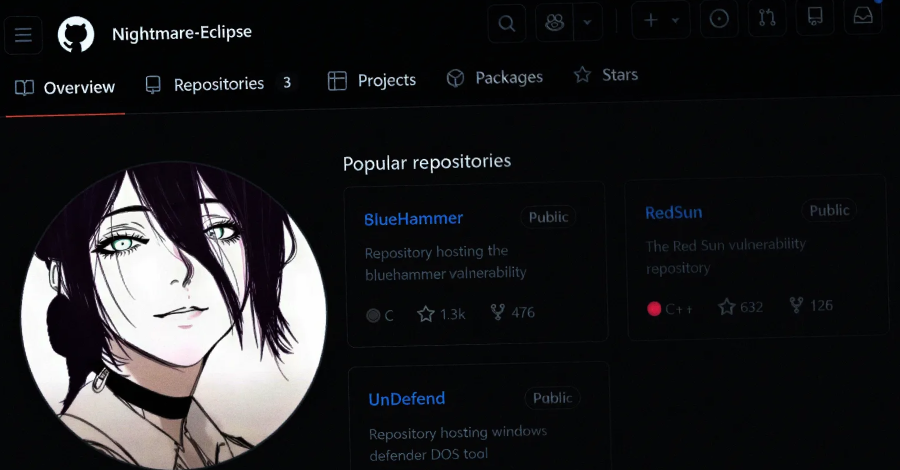
One Vishing Call, 40 Million Spectrum Records: ShinyHunters' Charter Shakedown Explained
Charter Communications confirmed a data breach after the ShinyHunters extortion group threatened to publish stolen data. ShinyHunters claimed to have breached Charter on April 1 through a vishing attack that compromised an employee's Microsoft Entra account, which was then used to export millions of records from Charter's Salesforce instance. The group claims 40 million records stolen; Have I Been Pwned analysis confirmed 4.9 million accounts affected, containing names, emails, addresses, phone numbers, plan details, and support ticket data.
Key Takeaways
Vishing (voice phishing) of employee credentials is now ShinyHunters' standard initial access technique — train employees to verify all IT requests through official back-channels.
Microsoft Entra ID accounts with Salesforce or CRM access are high-value targets — implement phishing-resistant MFA and monitor for anomalous login locations or data export volume.
Spectrum customers should change account passwords and monitor for credential stuffing attempts.
ShinyHunters is demonstrating systematic, industrialized social engineering against enterprise cloud environments — treat vishing as a critical attack surface.
Lawrence Abrams
Carnival's Sixth Breach in a Decade: ShinyHunters Confirms 6 Million Customers Exposed
Carnival Corporation, the world's largest cruise operator, began notifying 5,995,277 customers that their personal information was stolen in an April 10 breach by ShinyHunters. The breach began with a social engineering attack that compromised a single employee account. Compromised information includes names, addresses, dates of birth, email addresses, phone numbers, and government-issued ID numbers. Carnival began offering credit monitoring to affected individuals.
Key Takeaways
A single compromised employee account via social engineering exposed data for ~6 million customers — this underscores the need for zero-trust access and strict data segmentation.
Affected individuals should monitor for identity theft, consider credit freezes, and be alert to follow-on phishing using stolen PII details.
Carnival has an extensive breach history — organizations with persistent breach patterns should conduct a fundamental review of their security architecture.
Government-issued ID numbers cannot be easily changed — affected customers face long-duration identity fraud risk.
Daryna Antoniuk
One Vendor, Many Victims: German Hospital Patients' Data Stolen Through a Billing Provider
A large-scale data breach struck Unimed, a company providing billing services for privately insured and self-paying patients on behalf of numerous German hospitals. The breach exposed sensitive patient data including billing information, affecting patients across a broad network of hospital clients. The incident is the latest in a pattern of healthcare supply chain breaches where a single third-party vendor compromise cascades exposure across multiple healthcare organizations simultaneously.
Key Takeaways
Healthcare supply chain breaches through billing and administrative vendors are occurring with increasing frequency — vendor security assessments must be a continuous process.
Third-party access to patient data should be governed by strict contractual data minimization requirements and monitored for anomalous access patterns.
Affected patients should be alert to medical identity theft — fraudulent insurance claims filed using stolen data can cause serious downstream harm.
Daryna Antoniuk
The Oncology Institute's Six-Month Wait: When Your Vendor Gets Breached and Nobody Tells You
The Oncology Institute (TOI) disclosed in an SEC filing that Kroll notified the company on May 20, 2026, that an unauthorized third party had accessed certain TOI information systems including patient data. The breach follows TOI's November 2025 initial disclosure, when the vendor's investigation was still ongoing. The timeline points toward Cognizant-owned TriZetto Provider Solutions as the likely affected vendor, which previously reported a breach affecting approximately 3.4 million individuals across multiple healthcare clients.
Key Takeaways
Healthcare organizations must establish clear breach notification SLAs with third-party vendors — the gap between November 2025 initial disclosure and May 2026 patient notification raises HIPAA compliance concerns.
Third-party vendor breaches now account for ~48% of healthcare breaches per DBIR 2026 — vendor risk management must be a board-level priority.
TOI patients should monitor for fraudulent insurance claims and medical identity theft, and enroll in any offered credit monitoring services.
Organizations should audit all current TriZetto/healthcare IT vendor relationships for exposure to this ongoing incident chain.
Eduard Kovacs
Project Glasswing's First Month: AI Found 10,000 Critical Bugs — Humans Can't Patch Them Fast Enough
Anthropic published an initial update on Project Glasswing, revealing that Claude Mythos Preview and approximately 50 partner organizations identified over 10,000 high- or critical-severity vulnerabilities across the world's most systemically important software in just one month. Of these, 6,202 were classified high or critical across 1,000+ open-source projects, with 1,726 confirmed true positives. Cloudflare alone found 2,000 bugs (400 critical/high); Mozilla fixed 271 Firefox vulnerabilities — a 10x increase over earlier Claude models. However, only 75 of 530 disclosed high/critical bugs have been patched — the bottleneck is human capacity to triage, not AI's ability to find.
Key Takeaways
AI-powered vulnerability discovery has fundamentally shifted the security bottleneck from 'finding bugs' to 'patching bugs' — organizations must scale their triage and remediation capacity.
The 90-day coordinated disclosure window means many of these 10,000+ vulnerabilities will become public in coming months — prioritize patching open-source dependencies proactively.
WolfSSL CVE-2026-5194 (CVSS 9.1) enables certificate forgery — patch immediately in any systems using WolfSSL for cryptographic operations.
The success of Glasswing signals offensive AI capabilities have crossed a real threshold — defenders must assume sophisticated attackers have equivalent autonomous vulnerability-finding capabilities.
The Hacker News